

Circular options: Lessons from Sony Smartphones and Nimbus Boats
The circular economy is often celebrated as a silver bullet for sustainable product design—but how often are the environmental benefits actually measured and verified? In our latest study (read the full article here), we took a deep dive into this question using life cycle assessment (LCA) to compare the environmental impact of both linear and circular versions of two very different products: a smartphone and a motorised leisure boat.
The results highlight something we in the LCA and circularity field know all too well—not all circular strategies guarantee environmental improvement.
Smartphone: Small Device, Big Impact
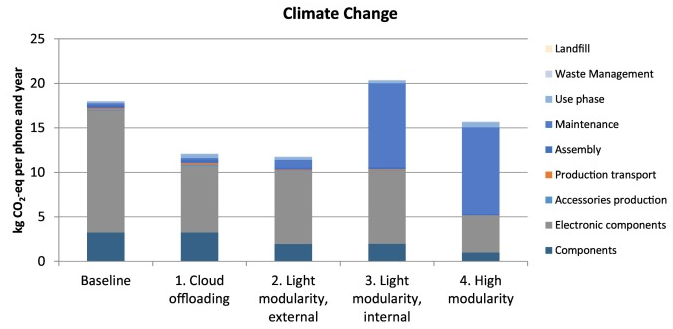
For the smartphone, the integrated circuit (IC) is the key environmental hotspot, responsible for 63% of the device’s total climate impact. It’s not the materials per se, but the energy-intensive manufacturing process—typically powered by fossil-heavy electricity mixes in Asia—that drives this high impact.
Circular solutions like modularity and cloud offloading showed promise:
-
Light modularity (external parts) reduced climate impact by 35% by extending the device's life.
-
Cloud offloading—shifting processing to the cloud—cut emissions by 33%.
-
However, replacing internal components like the IC can increase the impact, especially if not accompanied by a significant lifespan extension.
Perhaps most promisingly, using renewable energy in IC production alone could slash emissions by 50%, and combined with circular design, achieve up to an 81% reduction in climate impact.
Motorboat: Big Machine, Different Story
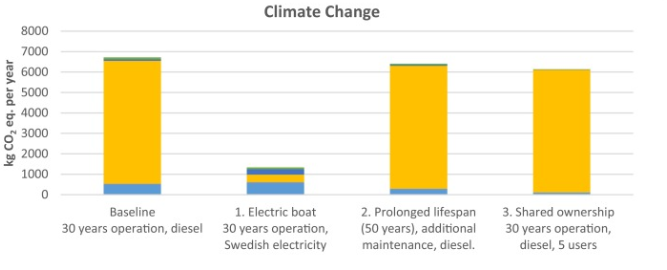
For the 10-metre motorised leisure boat, it’s the use phase that dominates, with diesel fuel accounting for nearly 90% of total climate emissions. In contrast, abiotic depletion and toxicity were driven by electronic components, maintenance, and anti-fouling paint.
Three circular scenarios were tested:
Electrification delivered the biggest climate win with an 80% reduction in emissions.
Sharing the boat (five users) and extending its lifespan helped reduce resource and toxicity impacts, but had less effect on GHGs due to continued fossil fuel use.
Combining electrification with sharing offers the best all-round benefits.
What Does This Mean for Circular Economy Strategy?
This study reinforces that circularity is not inherently sustainable. For some products, especially those with high production-phase impacts (like smartphones), strategies like modularity and renewable energy are key. For others, like motorboats with use-phase emissions, switching energy sources must come first.
Our findings suggest:
-
Start with eco-efficiency first (e.g., renewable energy, efficient fuels).
-
Layer circular strategies (like reuse, modularity, and sharing) once key hotspots are addressed.
-
Evaluate each product on its own lifecycle characteristics—one-size-fits-all circularity doesn’t work.
Why This Matters
There is still a significant gap between the intent and impact of many circular economy initiatives. Our LCA-based approach highlights the need for evidence-led decision-making in product design and business model innovation. Circularity must not be pursued for its own sake—it must demonstrably reduce environmental burdens.
If your organisation is navigating how to design or transition to more circular and sustainable products, we can help you model the real impacts—before committing to a strategy that may not deliver.
Get in touch with us at steve.harrris@godolphinsustainability.com to discuss how LCA and circular economy strategy can inform your next sustainable innovation